
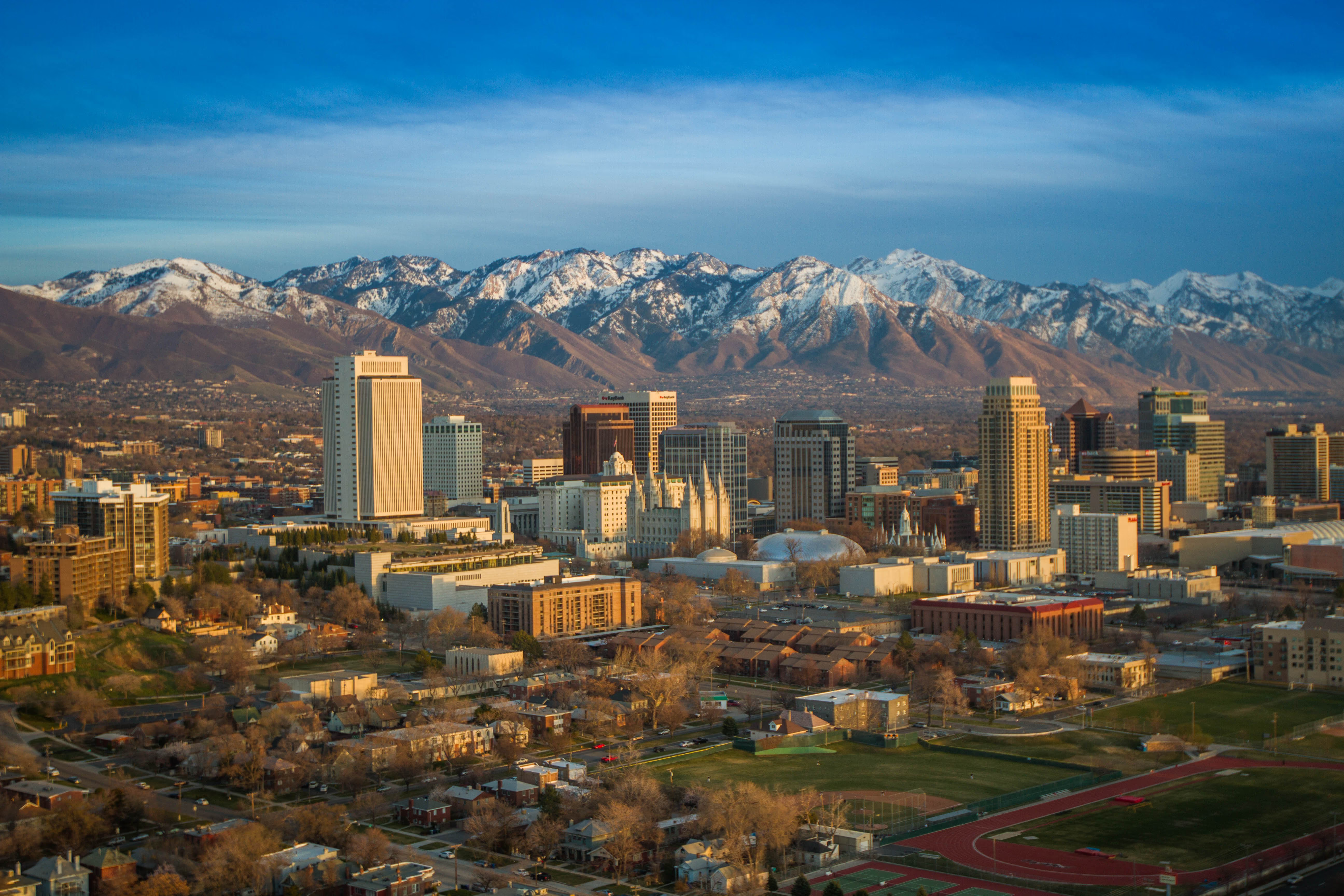
Elrock Capital arranges commercial real estate financing in Salt Lake City, including construction loans, bridge loans, permanent debt, preferred equity, mezzanine debt, and joint venture equity for projects from $10 million to more than $100 million. We match Utah sponsors with the private debt funds, family offices, banks, credit unions, life companies, and CMBS lenders most active in the Wasatch Front.
Winter Olympics, a defined runway of development investment
Invested in the rebuilt Salt Lake City International Airport
Industrial inventory across the Wasatch Front
Population across the Wasatch Front

Salt Lake City anchors the Wasatch Front, a two-and-a-half-million-person corridor with one of the youngest workforces and most consistently top-ranked state economies in the country. The Silicon Slopes technology cluster, the rebuilt international airport, and the region's logistics position have driven a decade of institutional maturation, and the 2034 Winter Olympics award gives the market a defined runway of infrastructure and hospitality investment.For sponsors, Utah combines growth-market fundamentals with an unusually business-forward public sector, which shows up in entitlement timelines and development certainty that lenders reward.
The technology corridor from Salt Lake through Lehi to Provo continues to add software and fintech employment, while the Northwest Quadrant's inland port development builds out the Mountain West's distribution hub alongside the rebuilt airport's cargo capacity. The University of Utah and its research hospital system anchor the city's east side.The Olympic runway will concentrate hospitality, venue, and transit investment over the coming years, and Utah's demographic engine, the youngest population in the country, keeps household formation and housing demand structurally strong.

Multifamily leads institutional volume across downtown, Sugar House, and the corridor cities, supported by the state's demographic tailwind and persistent undersupply. Industrial performs in the Northwest Quadrant and along the I-15 corridor, build-to-rent and residential land draw steady capital through Utah County, and hospitality investment builds toward the Olympic horizon. Office capital favors downtown's newest product and the Silicon Slopes corridor.
Downtown Salt Lake and the Granary District for multifamily and mixed-use; Sugar House for residential and retail; the Northwest Quadrant for inland-port industrial; the Point of the Mountain and Lehi for the technology corridor; Draper and Sandy along I-15; and Ogden and Provo anchoring the corridor's north and south ends.


Utah's regional banks and credit unions are notably aggressive in their home market, and national debt funds, life companies, and agency lenders have deepened their Wasatch Front coverage as the market institutionalized. Underwriting here benefits from fast, predictable entitlements and a demographic story lenders trust, with attention on water and infrastructure capacity for large-scale residential land in the growth corridors. The Olympic timeline is already entering hospitality underwriting conversations, and early positioning matters.

Elrock arranges construction loans, bridge loans, permanent financing, subordinate financing such as preferred equity and mezzanine debt, and joint venture equity across the Wasatch Front, typically on projects from $10 million to more than $100 million and selectively lower.
The Games give the market a defined runway of infrastructure, venue, and hospitality investment, and lenders have begun underwriting that horizon in hotel and mixed-use conversations. Sponsors positioning hospitality and transit-adjacent projects ahead of the buildout can present a demand catalyst with a date attached, which is rare.
Yes. The inland port development, airport cargo capacity, and the I-15 and I-80 crossroads position have made the Northwest Quadrant the Mountain West's distribution growth story, and banks, debt funds, and institutional lenders actively quote construction and permanent structures there.
Utah regional banks and credit unions compete aggressively at home, joined by national debt funds, family offices, life companies, and agency lenders for multifamily. The state's growth and governance profile keeps national capital engaged, and well-structured sponsors see genuine competition.
Our target range is $10 million to more than $100 million, selectively lower, across construction, refinance, acquisition, and value-add scenarios for most property types.

