
Elrock Capital arranges commercial real estate financing in Philadelphia, including construction loans, bridge loans, permanent debt, preferred equity, mezzanine debt, and joint venture equity for projects from $10 million to more than $100 million. We match Philadelphia-area sponsors with the private debt funds, family offices, banks, credit unions, life companies, and CMBS lenders most active in Greater Philadelphia.
Spots climbed in the ULI/PwC Emerging Trends 2026 rankings
Acres in the Navy Yard redevelopment
Region where CAR-T cell therapy was pioneered
Metro population, among the largest in the U.S.

Philadelphia is one of the country's great eds-and-meds economies, with more than one hundred colleges and universities, a hospital network led by Penn, Jefferson, and CHOP, and the research base that made the region the birthplace of CAR-T cell therapy and a leading cell and gene therapy cluster. The market moved up more than ten spots in the ULI/PwC Emerging Trends rankings for 2026 as investors rotated back toward supply-disciplined Northeast metros.For sponsors, Philadelphia offers institutional demand anchors at a basis well below New York and Washington, with a lender field that knows the market's neighborhoods deeply.
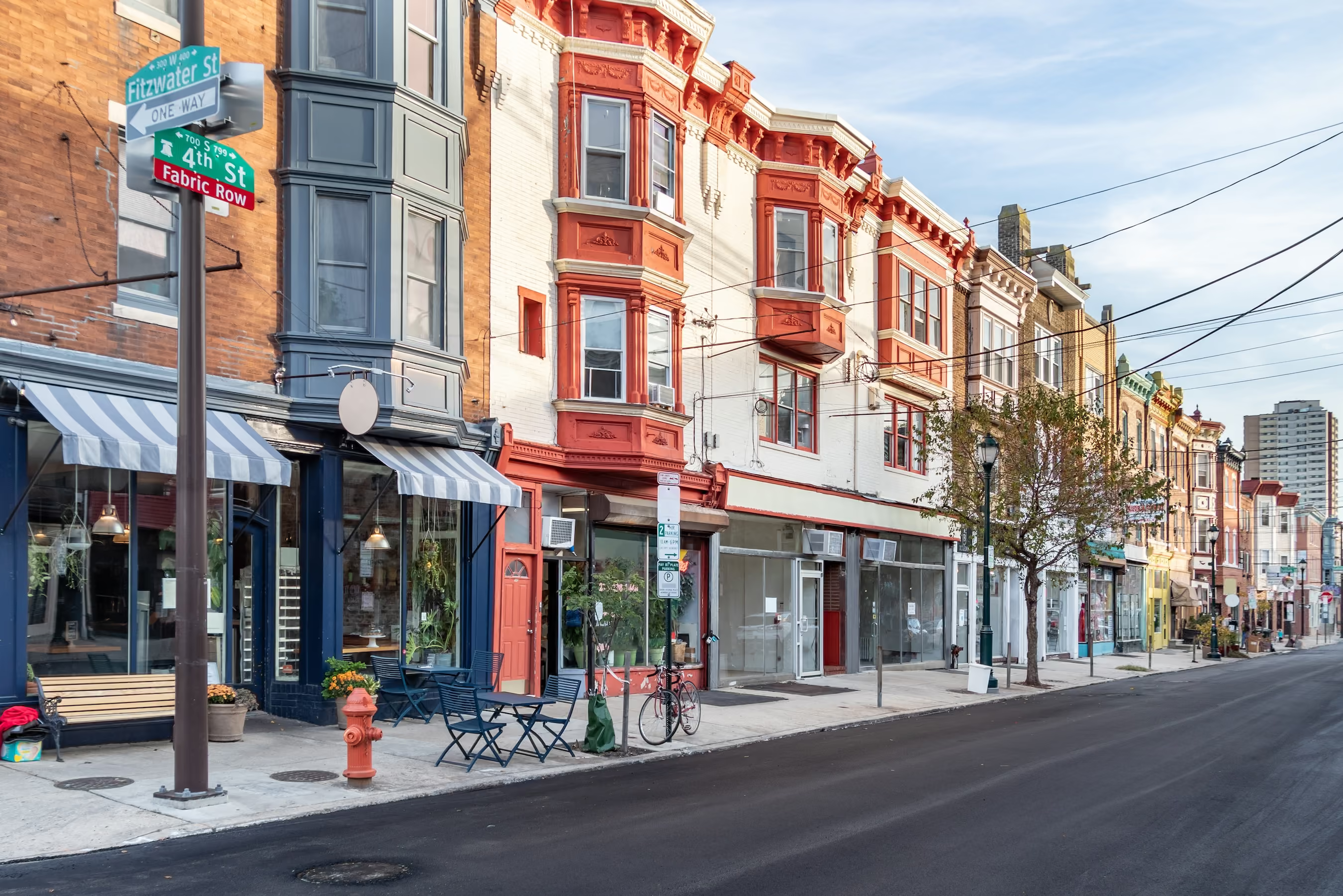
University City concentrates one of the densest research ecosystems in the country, feeding lab, medical, and residential demand west of the Schuylkill. The Navy Yard's twelve-hundred-acre redevelopment keeps adding life science, industrial, and now residential density on the Delaware, while PhilaPort's growth and the I-95 corridor sustain the regional logistics base.King of Prussia anchors the suburban office and retail economy, and the city's rowhouse neighborhoods support one of the most active small-and-mid-scale residential development scenes in the Northeast.

Multifamily leads institutional volume from Center City and University City through the ring neighborhoods, supported by the region's student and healthcare employment base. Life science capital concentrates in University City and the Navy Yard for the right sponsors, industrial performs along I-95 and the airport corridor, and grocery-anchored retail holds steady across the metro. Office capital favors University City and trophy Center City product.
University City for labs, medical, and residential; Center City for office, residential, and hospitality; the Navy Yard for life science and industrial; Fishtown and Kensington for residential growth; Northeast Philadelphia and the airport corridor for industrial; and King of Prussia and the Main Line for suburban office, retail, and residential.


Regional banks, credit unions, debt funds, life companies, and agency lenders all quote Philadelphia actively, and the market's eds-and-meds stability makes it a favorite for lenders seeking durable demand at reasonable basis. Local mechanics worth knowing: the city's tax abatement program has long shaped residential development math and lenders model it explicitly, and Philadelphia's construction and use taxes belong in every development budget conversation. We put both into sizing materials from the start.

Elrock arranges construction loans, bridge loans, permanent financing, subordinate financing such as preferred equity and mezzanine debt, and joint venture equity across Greater Philadelphia, typically on projects from $10 million to more than $100 million and selectively lower.
The city's abatement program has shaped residential development economics for two decades, and lenders model the abatement schedule directly in stabilized underwriting. Projects should present the abatement status and timeline clearly, and we build that into offering materials so capital sources size to the right numbers.
Yes, selectively. Philadelphia's cell and gene therapy base gives the market genuine life science credibility, and lenders favor experienced sponsors, institutional or credit tenancy, and the University City and Navy Yard cores. We position those deals to the debt funds and institutions active in the sector.
Philadelphia draws regional banks, credit unions, national debt funds, family offices, life companies, and agency lenders for multifamily. The market's demand stability and pricing basis have widened the field as investors rotated back to the Northeast.
Our target range is $10 million to more than $100 million, selectively lower, across construction, refinance, acquisition, and value-add scenarios for most property types.

